By Jenny Whichard, ‘92 Head of Lower School at McLean School
Visualization is a tried-and-true strategy. Professional athletes use it before a big game, mentally rehearsing everything from warm-ups to the winning basket, goal, or shot. But athletes aren’t the only ones who benefit. Visualization is also a powerful way to strengthen executive functioning skills for students. Research shows that creating positive mental images in advance helps the brain prepare, plan, and achieve successful outcomes.
Executive functioning expert and author Sarah Ward has written extensively about the connection between visualizing an activity and being able to complete it. When students can picture the finished product, they are better able to plan, organize, initiate, and complete a task.
While some students visualize naturally, many need explicit instruction and opportunities to practice. Visualization is especially valuable in three areas that support success both in school and beyond: routines, time management, and organization.
Building routines

Spring 2025
@Rebecca Drobis Photography All Rights Reserved
Whether it’s getting ready for school or settling into the classroom, routines become easier when students can picture what success looks like. At McLean School, teachers intentionally support students as they learn new routines and gradually reduce that support as independence grows.
One effective strategy in Lower School is using personalized photographs. Rather than relying on generic images, teachers may photograph students completing classroom routines—sitting in morning meeting, putting away materials, or taking out a notebook. Seeing themselves successfully completing each step makes it easier to repeat the routine independently.
Parents can use the same strategy at home by photographing their child brushing their teeth, getting dressed, or putting on a backpack and displaying those images where the routine takes place. Another helpful technique is guiding children through a mental rehearsal of the next morning, especially before a change in routine such as a field trip or different transportation plan.
Making time visible
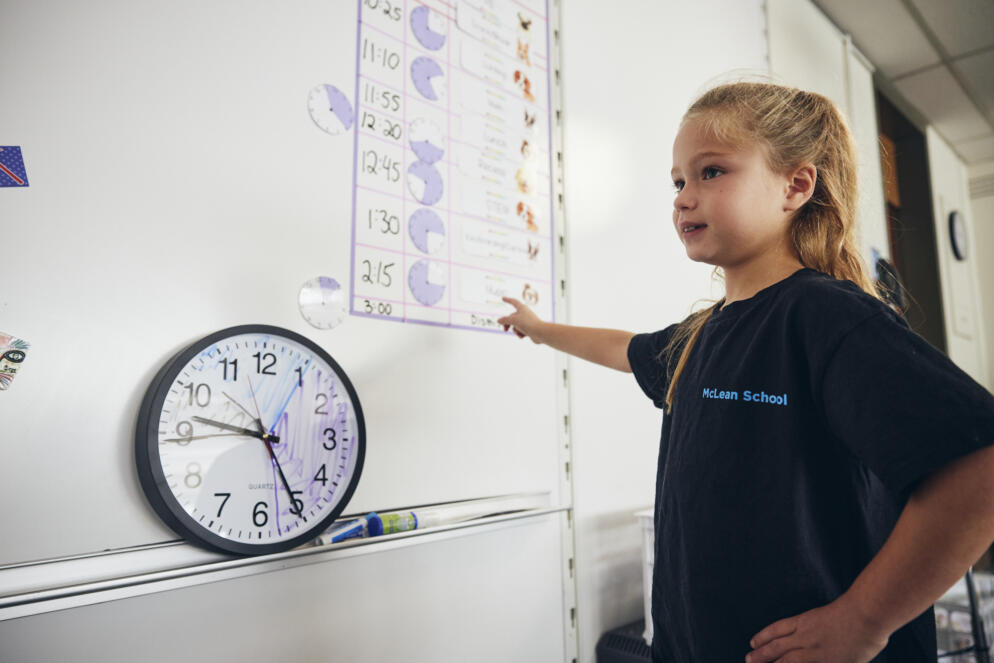
For many students with executive functioning challenges, time feels abstract. It’s easy to lose track of it or underestimate how long a task will take. Visualization helps make time something students can understand.
At McLean, teachers use strategies adapted from Sarah Ward’s research, including visual calendars, color-coded clocks, and schedules that represent the length of different parts of the day. These tools help students develop realistic expectations, estimate how long tasks will take, and strengthen time management skills.
At home, parents can help by breaking larger activities into smaller chunks of time. Instead of saying, “It’s time to get ready,” try walking through the sequence: “Two minutes to brush your teeth, five minutes to get dressed, and three minutes to pack your backpack.” Visual timers can also help children see time passing rather than simply hearing about it.
Managing materials
Spring 2025
@Rebecca Drobis Photography All Rights Reserved
Organization begins with being able to picture the finished result. For students who struggle with executive functioning, tasks like cleaning a bedroom or organizing a backpack can feel overwhelming because they can’t easily visualize what “organized” looks like.
At McLean, teachers use color-coded systems, photographs of organized lockers and backpacks, and structured organizational tools that prepare students for increasing independence. These visual models give students a concrete target to work toward.
Parents can reinforce this at home by organizing a room or backpack together, then taking photos of the completed space. Those pictures become helpful reminders of where items belong and what the finished result should look like.
Visualization extends far beyond routines and organization. It can reduce anxiety before a presentation, test, or difficult conversation by helping students mentally rehearse success instead of worrying about what might go wrong.
When practiced consistently, visualization strengthens attention, planning, memory, and organization—all essential executive functioning skills. By teaching students to picture success before they begin, we help them develop the confidence and independence they need not only in school, but throughout life.
About the Author: Jenny Whichard, ‘92 is the Head of Lower School at McLean School, in Potomac, MD. McLean School serves bright K-12 students, including those with dyslexia, ADHD, and executive functioning challenges. By focusing on students’ strengths and teaching the way they learn, McLean transforms how students see themselves. We offer a college-preparatory curriculum that is traditional without being rigid, challenging without being intimidating, and designed with the real world in mind. Learn more at mcleanschool.org