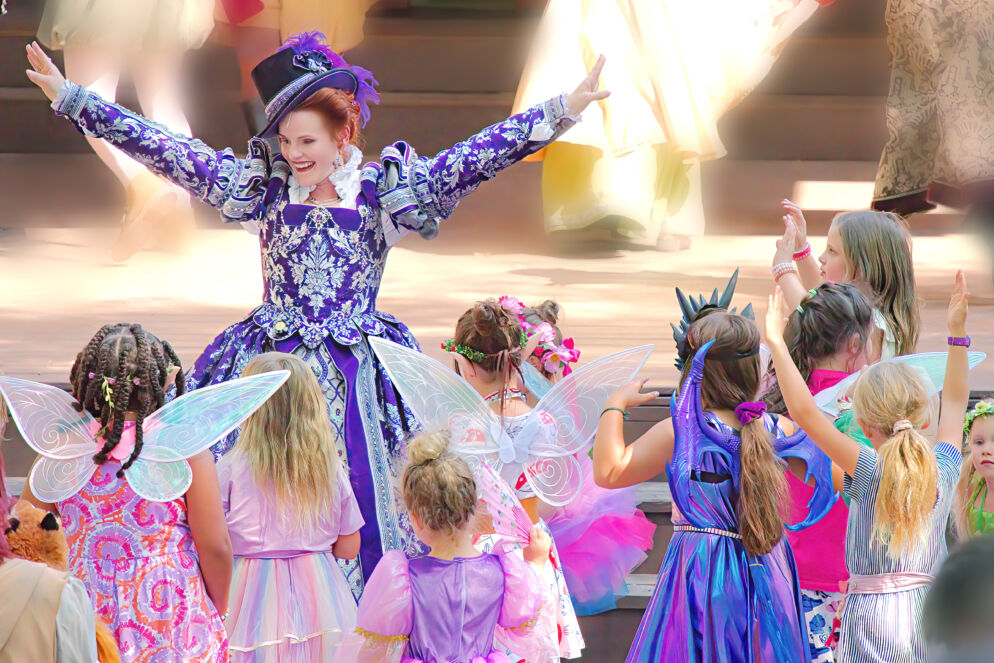
Kids and adults alike benefit from play. The National Institute of Play defines play as more of a state of mind — feeling the freedom to explore, be curious and engage, all without the pressure to perform. Through play, we strengthen learning and memory, problem solving, creativity, emotional regulation and social understanding without excessive risk.
Imagining what it would have been like to live in another time period, from what people ate to how they danced, what tools or toys they used, how they dressed and what they saw, allows us to flex those muscles through pretend play, and there are few more immersive experiences available for this than renaissance festivals.
The cultural rebirth of the 14th to 17th centuries draws to mind Shakespeare, pirates, circus acts like juggling, archery and much more to entertain all ages.
Two of the nation’s most attended renaissance festivals (250,000-300,000 visitors per season), are within driving distance for Marylanders, and both hit their peak in October. Though they have a lot in common, each has its niche. Here’s what families can expect when visiting.
The Faire Footprint
Both the Maryland Renaissance Festival and Pennsylvania Renaissance Faire have permanent festival sites open to the public seasonally, making for a realistic, lived-in experience for families.
MD: 27-acre wooded village of Revel Grove in Crownsville
PA: 35-acre site known as The Shire at Mount Hope Estate in Manheim
Strolling the Grounds
The Maryland Renaissance Festival has a strong focus on authenticity, and you’ll see it on your shoes! The grounds are dirt and gravel, so be sure to prep for dusty clouds with allergy medicine and dirty hands with wet wipes. The natural layout of the fair makes it easy to maneuver strollers around the grounds, but there will be some steep hills. Pennsylvania’s fair is also stroller-friendly but has paved pathways throughout its village grounds.
Ye Olde Merchants
Families looking to fully dive into another world may appreciate that Maryland almost exclusively sticks to handmade or period-appropriate goods and its village consists of wooden structures in keeping with the time period. Pennsylvania, however, adds a bit of fun and novelty to the fair experience with a giant Pyrate Ship pub, a live mermaid, a unicorn meet-and-greet, brightly colored buildings, often with renaissance-themed puns like “Wooden Shoe Like Some Cheese,” and modern brands and gifts among the traditional.
Don’t miss:
MD: Select your own wizarding wand at Sleeping Beauties, sample different types of honey at The Bee Folks and try historic games at Ye Olde Gamery.
PA: Find Harry Potter candy and other favorites at Dr. Toadstool’s Candy Emporium and hold kittens from LaForge’s feline cat colony and rescue program (and stay for a blacksmith demo).
What Will My Kids Like To Eat?
Both fairs offer renaissance-inspired grub such as meats on a stick, turkey legs, scotch eggs, baked potatoes and whole pickles to snack on. The Pennsylvania fair is the only one with a dine-in restaurant. The Anchor & Mermaid includes a kids’ menu for ages 11 and younger.
Not-To-Miss at MD: Ice cream shakes (including chai and pumpkin spice), cone of cookies with ice cold milk and ribbon fries (chips strung together in a ribbon), all in the White Stag dining area
Not-To-Miss at PA: Ice cream at the Queen’s Confectionary, virgin slushies at Cider House, hot cinnamon bread with icing at House of Cinn, mac and cheese at Macbeth’s
Are Shows & Activities Kid-Friendly?
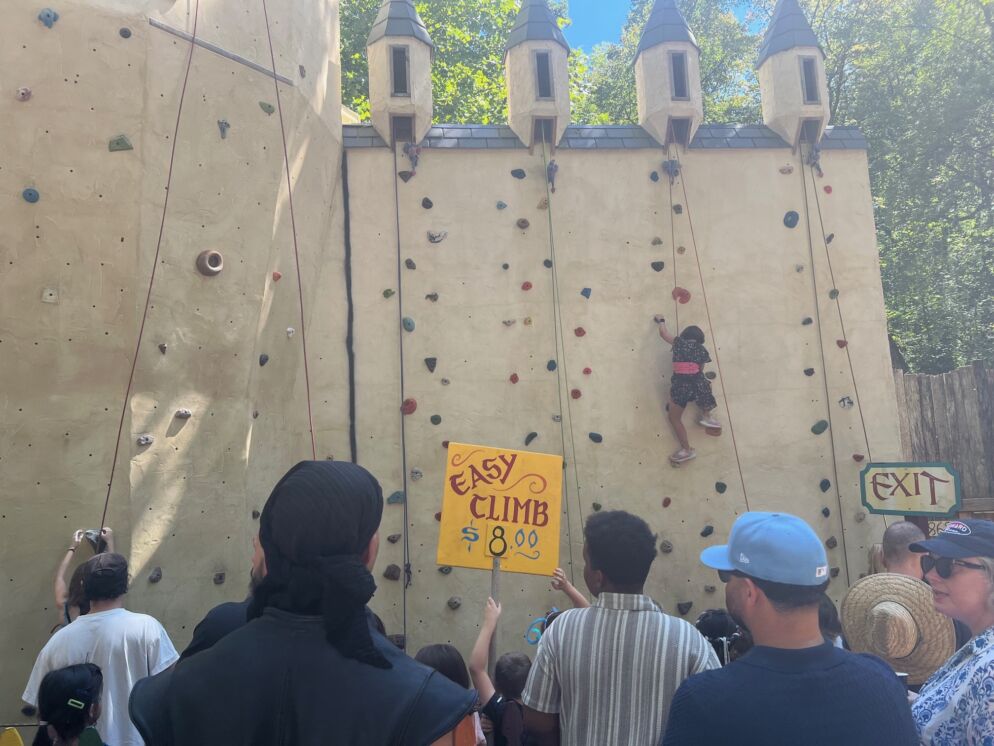
Most performances are family-friendly, but there will be plenty of jokes that will go over kids’ heads. As one performer put it, “That joke was top shelf — the kids can’t reach it.” Other shows will be marked for parental discretion in fair programs. For activities, there are easy, medium and hard climbs at Maryland’s rock-climbing wall, making it a good option for teens and younger siblings to do together. Pennsylvania has swordfights with protective gear in the Fight Circle, a fun challenge for older kids and teens where the entire family can cheer them on. Teens may also enjoy breaking old glass bottles at Pennsylvania’s Wreck Room, and each fair has its fair share of historic games for all ages as well, like Jacob’s ladder, bullseye games and toss challenges.
Learn Something New
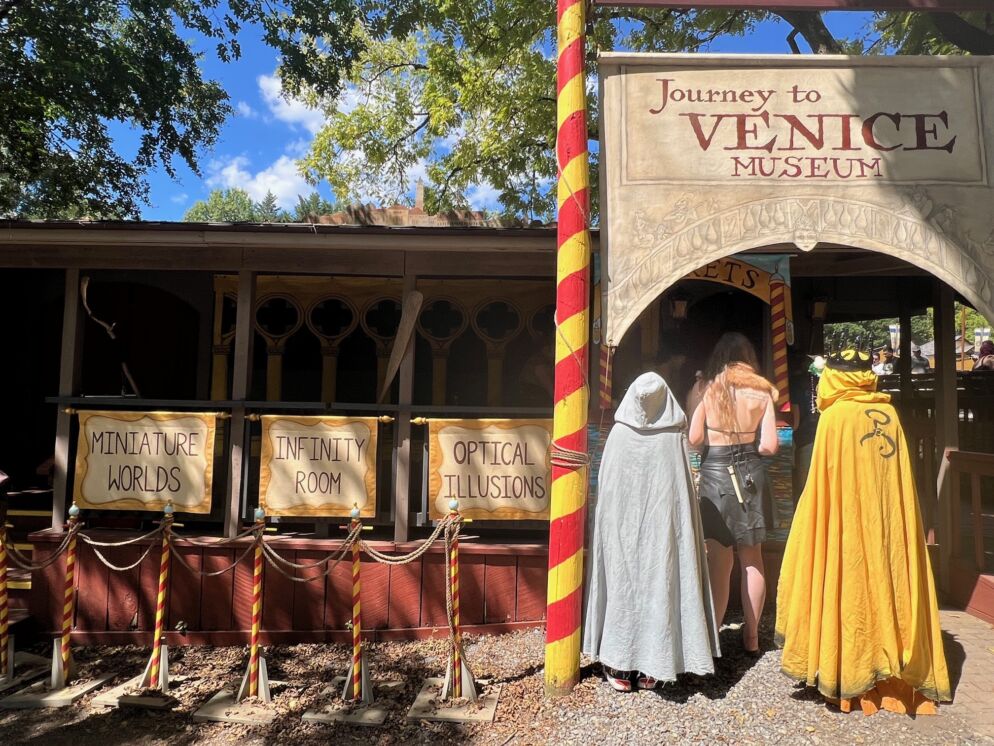
Performers often try and sprinkle in educational facts in their shows. (Did you know the tip of a whip moves faster than the speed of sound and creates a sonic boom?) But you can also learn through on-site mini museums like Maryland’s Journey to Venice Museum (including optical illusions, an infinity room and miniature worlds). Both fairs include demonstrations to learn about topics like birds of prey and glassblowing. Come back from Nov. 21 to Dec. 13 during Yuletide to step inside the historic Victorian mansion at Mount Hope Estate.
Where Can Kids Play?
Maryland’s giant slide (only $1 per ride) has kids and adults take a magic carpet down through a canopy of trees, emptying out near a dedicated play area that includes The Wee Baron — a big wooden pirate ship playground — and a swing set. Alcohol is not permitted in the play area, and kids must be supervised. Pennsylvania does not have an area set aside for children but keeps kids busy with activities like scavenger hunts, a kids’ knighting ceremony, costume contests, bodyweight swings and a Narnia-themed escape room. Each weekend has a theme, so check the fair’s schedule for special activities.
Musical Traditions
Aside from comedy, theater and death-defying circus arts, music is a big part of renaissance festivals. Check each fair’s schedule to hear shanties, pub songs, traditional instruments like bagpipes and lutes and more. Maryland’s fair closes with The Piper Jones Band. In-the-know fairgoers often lead everyone in traditional dances to the band’s set that even kids can join in. Pennsylvania closes its fair with a pub sing, a variety show of performances that tends to have families dancing or singing along from the audience.
That Joust About Covers It
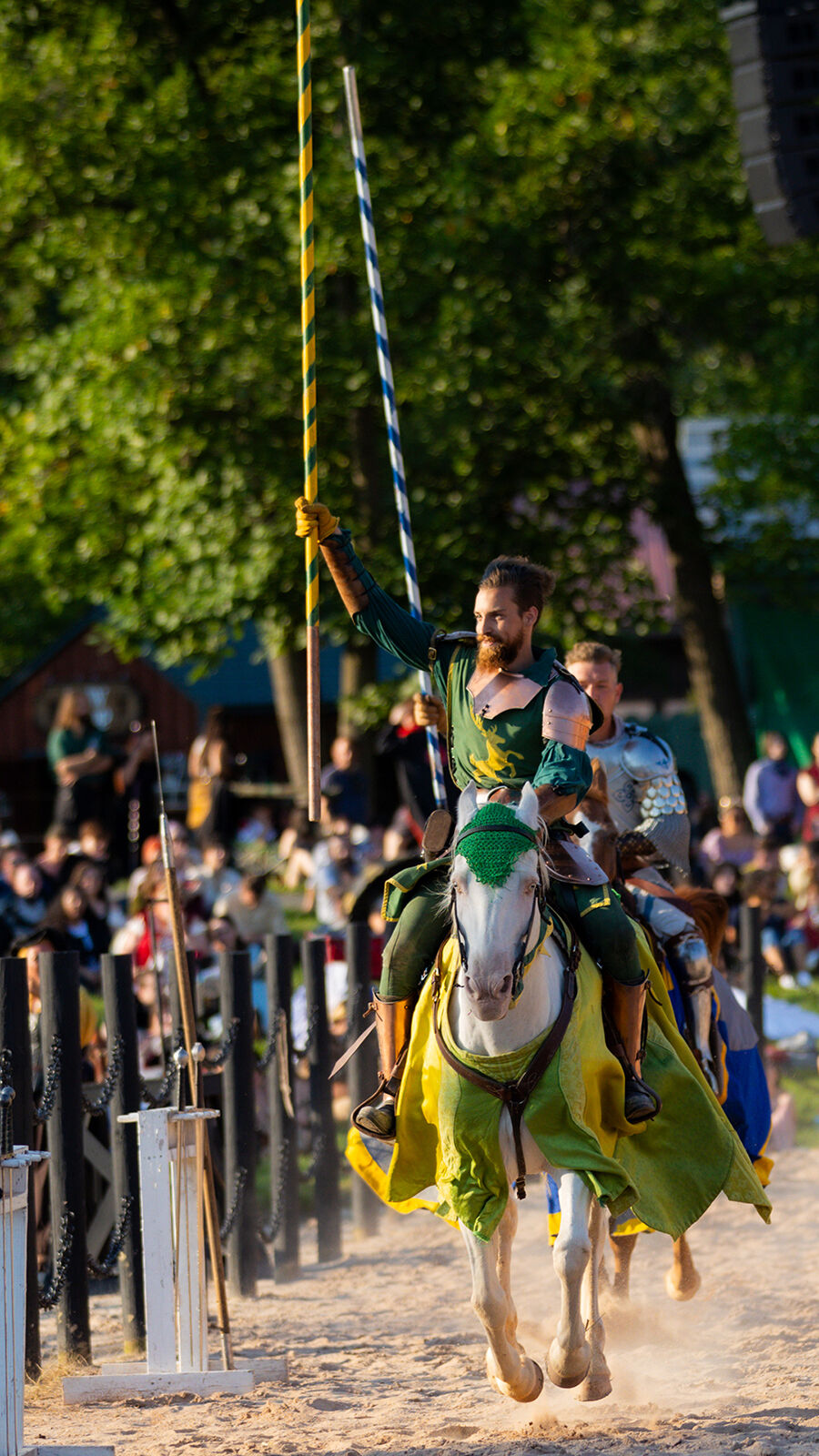
Throughout the day, each fair has scheduled jousting tournaments (which involve knights charging with wooden lances to knock opponents off their horses), but the big event of the day is the final joust. Both final jousts wrap up the day’s royal court storyline — and end in a knock-down, drag-out battle on the field.
PA Exclusive: Sit on one side to root for the “good guys” and the other side to root for the “bad guys,” and expect some extra spectacle including cannons, fireworks and occasional non-renaissance guests (hello, vampires!) depending on the weekend. Note: Noise could be too loud for some children; sitting in the back may be preferable.
Know Before You Go
For Mom & Dad
Maryland sells mead (a traditional fermented honey drink), wine and beer; Pennsylvania also includes mixed cocktails, cider and absinthe and has a winery and distillery on site to visit as you exit.
Pet Policy
Pets are not allowed at the Maryland fair; dogs can attend Pennsylvania’s fair with a special dog ticket and waiver in advance. (You can even enter your dog into a costume contest!) Service dogs are welcome at both fairs.
Baby Changing Stations
Both fairs have changing stations; Maryland has port-a-potty stations and Pennsylvania has public bathrooms.
Costumes Are Encouraged!
Both fairs restrict inappropriate attire and non-thematic, non-removable headwear.
Accessibility
Visit each fair’s website to learn about accessibility options; Maryland will have a number of ASL-interpreted shows Oct. 11. A full list will be available at guest services.