In 1995, shortly before Debbie Sahlin’s son Ryan’s first birthday, he suffered from a traumatic brain injury as a result of an accident. After his life-changing injury, Sahlin found her world permanently transformed. She became an expert in her son’s care and founded the Lollipop Kids Foundation in 2010. The foundation grew to serve thousands of children with complex medical conditions and disabilities. In January 2024 it was rebranded as Ryan’s Place Foundation, in Gaithersburg, Maryland, in honor of her son and its expanding care programming. Sahlin spoke with Washington Family about what she wants parents of typically developing children to know about families with disabled children.
What would you say to a parent who has a typically developing child [to convey to them] that a disabled child is not less, just different?
I think it would be through the [Smile Don’t Stare] campaign we did. I think children are a lot smarter … than we give them credit for. They would understand “This child is in a wheelchair. Their wheelchair is their legs.” I guess the best thing [to know] is it’s OK for a child to stare. It’s even better to ask a question.

What would you recommend for parents when we see children having a hard time in public with invisible disabilities?
I think that understanding that we as people tend to judge. I think explaining that for some, it’s like sensory overload and … their brains aren’t accepting it the way ours do — that’s why they’re doing what they’re doing. It’s not mean; it’s not bad. It’s just their way of self-regulating.
How can parents of typically developing children get involved in the community to help families of disabled children feel included?
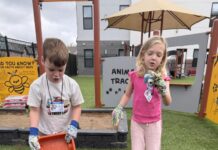
I think we need to teach our children to be better friends, and you do that through introduction … Finding a local nonprofit and bringing your kids in to volunteer, that’s going to be a really good way of introducing it. It teaches you how to be a better friend because you’re not scared.
What else would you like parents of typically developing children to know?
I think some parents think we may look at it as a burden, having a child that’s different. I think parents need to understand that we love our children as much as you love your children. I think that’s a simple statement that people forget. They say, “Oh, I’m sorry.” Please, don’t be sorry. If you could take away the pity that people put on others, that would be helpful … It’s so important to educate your children that it’s not scary and it’s OK to ask questions, even if it is right in front of that family.