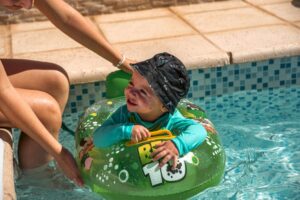
The summer season means pool parties, beach trips, camp and vacations. Swimming is a fun-filled way for kids to play, exercise and improve their level of confidence, but it can be dangerous without proper safety precautions.
Swim safety isn’t just aimed at preventing kids from drowning: It also protects them from brain injuries incurred with the activity. Anoxic brain injury results from a lack of oxygen supply to the brain, while hypoxic brain injury results when the brain receives insufficient amounts of oxygen.
These injuries can occur after a drowning accident, even if the person survives, and can result in significant impairments to motor functions, learning, cognitive processes, memory and speech skills, or contribute to behavioral problems.
Below are some key guidelines to follow:
- Never leave kids alone in or around the water, even for just a second. Drowning is silent and swift and looks nothing like screaming and thrashing about. An adult must be responsible for supervising kids around water, avoiding distractions such as mobile devices and always being within an arm’s reach of them.
- Be sure to have pool fences, locked gates, swimming instruction, life jackets and rules. Swimming lessons will assist in developing skills, but they cannot make anyone resistant to drowning.
- If boating, swimming in a lake or going to the beach, children must wear a life vest.
- Instead of diving right in, teach your kids to never jump into shallow water, above-ground pools, murky water, lakes, rivers or any place where depth is unknown. Doing so can cause a brain injury (concussion), skull fracture, spinal cord injury or even paralysis.
- Always enter unfamiliar places feet first and watch out for “no diving” signs.
- Concussions can occur even when kids are playing casually around the pool. They might hit their heads against the edge of the pool, diving board, slide, another child or the bottom of the pool. Symptoms include headache, dizziness, confusion, feeling sick, blurred vision, being sensitive to noise and light, balance issues, fatigue and behavioral change.
- One doesn’t have to lose consciousness to get a concussion, so immediately stop any activity, including swimming or playing around the pool, if your kids show any of these symptoms. Tell your children to immediately report if they hit their heads, experience trouble breathing, ingest water or feel lightheaded or overly fatigued after swimming.
- Water safety also means no running, no shoving, no horsing around near the pool, no breath-holding games and no swimming or diving without supervision.
In short, careful supervision, proper diving practices, barriers around pools, use of personal floatation devices and timely intervention regarding signs of concussions can ensure your kids will be safe in the water this summer.
Learn more from The Brain Injury Association of Maryland at biamd.org or call 800-221-6443.
Caitlin Starr is the Executive Director at Brain Injury Association of Maryland. Starr has a bachelor of science in human development studies, family studies and related services, as a well as a master of social work. She has been a fixture at the Brain Injury Association of Maryland for a decade and a Certified Brain Injury Specialist Trainer since 2019. Starr became the organization’s executive director in September 2025. Since 1983, the Brain Injury Association of Maryland has been serving local families living with brain injuries with resources, support groups, training and advocacy.