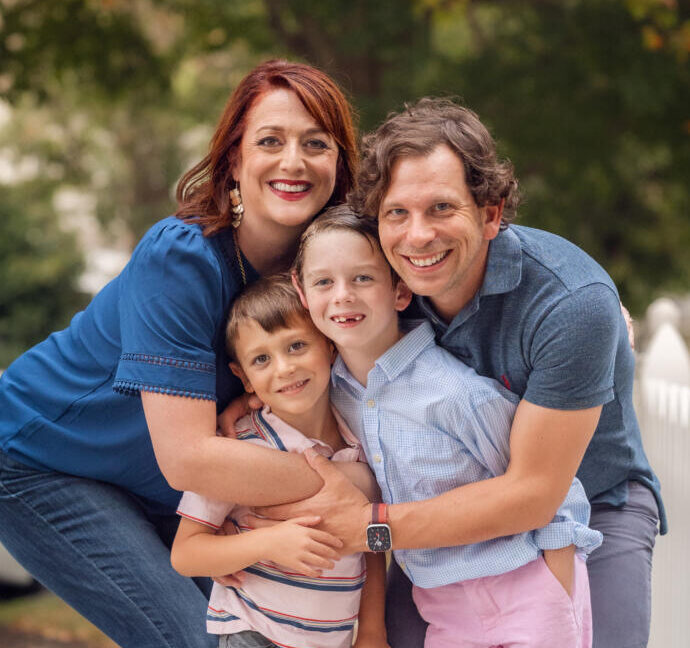
When Amanda Levin’s son was diagnosed with ADHD and autism, she found she had few friends who understood what it was like to raise neurodivergent children. This led Levin to found NeuroSpice Girls, a peer support group and social club for moms of neurodivergent children in the DMV. Since its founding in 2023, NeuroSpice Girls has grown to include nearly 800 moms. Levin was also diagnosed with ADHD and autism herself as an adult, which she says has given her a better understanding of the neurodivergent experience. She lives in Gaithersburg, Maryland, with her husband, Ari; their sons: Asher (10) and Amiel (6); and their cat, Annabelle.
This interview has been edited for length and clarity.
How is the experience of parenting neurodiverse children different from parenting neurotypical children?
Parenting kids is hard no matter what, but a lot of parts of the day that neurotypical people don’t even think about can be a fight for neurodivergent people. Some of the moms in Neurospice Girls have even had to pull their children out of the school system because their sensory issues were too much.
Even though neurodiversity is becoming more well-known, the world is still built for neurotypical people. As a parent, you have to be in mama bear mode all the time and have a more heightened awareness of what’s going on to keep your kids safe and advocate for their needs.
What kinds of services and resources does NeuroSpice Girls offer?
The initial thought was that it would help people find others in the same situation. It can be isolating to not have anyone to discuss your experiences with. I wanted to create a space where moms could ask questions, get referrals for healthcare providers and vent to people who could relate to what they’re going through. With my background in event planning, I’ve been experimenting with hosting events for moms that range from educational to social. If people want to talk about their family, they can, but if they want to escape that for a bit, that’s also fine.
You were also diagnosed with autism and ADHD later in life. How did that affect you as a parent?
It made sense, because my son and I are both kind of black-and-white thinkers. I’m very fortunate that my husband is the opposite and is very patient. In NeuroSpice Girls, it’s extremely common for members to find out they have autism or ADHD at 40 and older. It’s interesting, because they’ll be grateful that they’re doing early intervention for their child, but there’s always the thought that maybe certain parts of their life wouldn’t have been so hard if their parents had done the same for them.
How do you work to reduce the stigma around mental health and neurodiversity?
When I first decided to do this group, it was a choice to be more public about myself. I had a conversation with my husband that if I went through with this, people would know about Asher’s diagnosis, and there was concern that they wouldn’t accept that. Ultimately, the people who don’t accept you as you are weren’t the right people for you to begin with, so you have to find a village of people who understand your journey.
The more open you are about yourself, the more things will change. Some people have this extreme Hollywood version of what autism looks like. They’ll be like “Your son doesn’t act like ‘Rain Man,’ he’s not autistic,” but the more we can educate and have honest conversations about autism, the more people understand.
Family Favorites
Meal: Dinner at Burtons Grill & Bar
Local Spot: Sky Zone
Vacation Spot: The beach
Family Activity: Playing board games
Movie: The ‘Night at the Museum’ trilogy